WJA Member Spotlight – BigChange
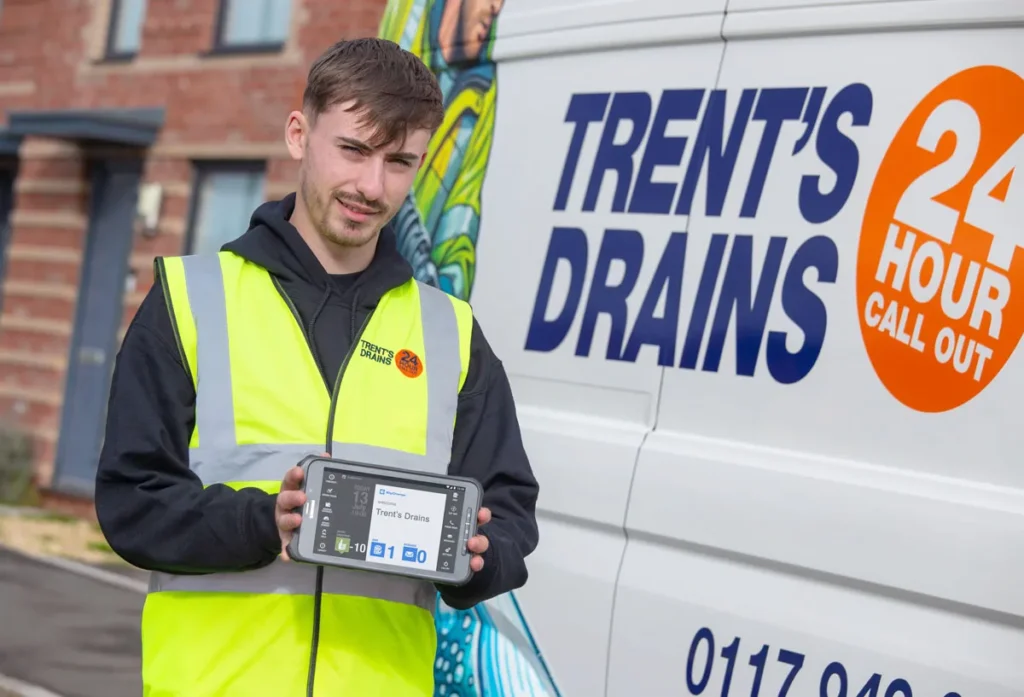
Company name: BigChange
Company representative: Daniel Armitage
Job title: UK Regional Partner Manager
What services do you deliver to the water jetting industry?
BigChange is a field service management platform used by drainage and water jetting businesses to run their day-to-day operations. It covers job scheduling, CRM, fleet tracking, digital job sheets, compliance documentation, invoicing and reporting — all in one system rather than spread across separate tools.
In practice, water jetting operators use it to dispatch crews, manage planned and reactive work, capture CCTV survey records, produce waste transfer notes and generate client reports. Engineers work from a mobile app on their phone or tablet, while office staff have a live view of every job and vehicle.
What new service developments should we look out for from you in the next year or so? Ones you can tell us about!
The main development is BigChange Lightning, which brings AI into the scheduling and operational layer of the platform. Rather than replacing human decision-making, it makes available relevant information precisely when it is needed, a process known as surfacing. This can include workload patterns, job history, and vehicle availability. In this way, it helps controllers and managers make faster, better-informed decisions.
What are the three most important elements of service delivery for your water jetting customers and why?
Response time: A significant proportion of water jetting work is reactive and time-sensitive. Getting the right vehicle and operative to site quickly depends on knowing, in real time, where every resource is and what it’s capable of. That requires accurate scheduling and live tracking working together.
Compliance documentation: Risk assessments and method statements, confined space records, waste transfer notes — these aren’t optional, and incomplete paperwork creates serious risk for the operator. The most effective approach is making compliance part of the job workflow itself, so it’s completed at the point of work rather than reconstructed afterwards.
Job records and reporting: Water jetting clients — particularly in utilities and FM — increasingly require detailed records of what was done, when, and by whom. The speed and accuracy of that reporting has become a factor in whether operators retain contracts.
What have been the business highlights for BigChange over the last 12 months?
BigChange became part of the Simpro Group in 2025, which brings together several field service software businesses — Simpro, AroFlo and ClockShark — under one group. That has broadened the resources available for product development and support.
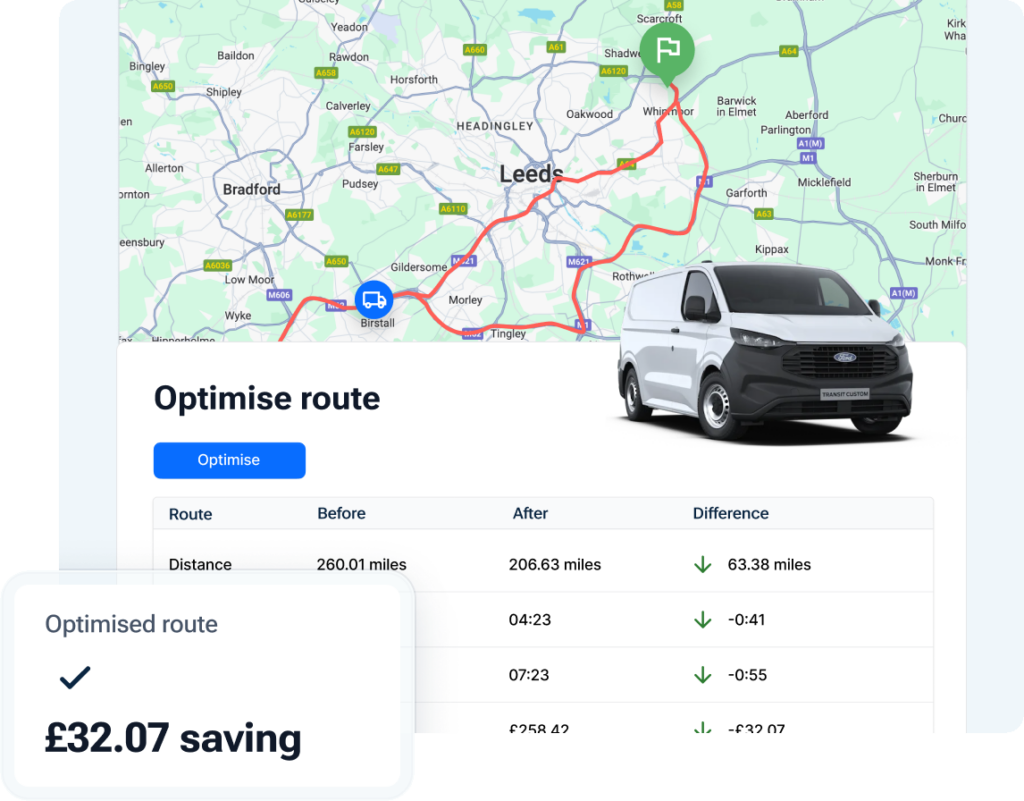
We passed the onboarding of 2,500 customers and launched BigChange Lightning. Within the drainage and water jetting sector, Trent’s Drains is a notable example of a customer that has grown significantly during their time with BigChange — from a small local operation to around 800 jobs a month, with a fleet that has doubled in size.
Tell us something that you think anyone outside your industry will find surprising about your products and/or services – and why?
The extent to which a single piece of software can cover the full operational cycle of a job — from the initial booking through to compliance sign-off, report generation and payment — often surprises people who haven’t seen it in practice.
For a water jetting operative in the field, that means arriving on site, completing the PoWRA on their phone, carrying out the work, capturing before-and-after photos, recording the waste transfer, and closing the job with a digital signature — all without any paperwork or calls to the office.
The client gets the completed report and invoice shortly after the job is done. The whole sequence runs through one system.
What’s the biggest change in technology or process you have witnessed in your service sector in recent years?
The move away from paper has been the most significant shift. When BigChange was founded in 2013, it was common for drainage and water jetting businesses to coordinate work by phone, record jobs on paper sheets and invoice at the end of the week or month.
That approach is now largely incompatible with what larger clients expect: digital records, same-day reporting and audit trails are increasinglystandard requirements.
AI is beginning to have a practical impact on scheduling and compliance monitoring, though adoption in the water jetting sector is still early.
The businesses that are using it are mainly applying it to workload forecasting and anomaly detection in job data rather than anything more speculative.
What do you think will be the biggest changes or challenges for your water jetting customers over the next 10 years?
Compliance pressure is likely to increase rather than ease. Regulation around water infrastructure, environmental protection and confined space working continues to develop, and the documentation burden on operators is growing alongside it.
Businesses that don’t have systems capable of producing auditable records will find it harder to win and retain contracts with regulated clients.
The skills pipeline is a genuine concern. Qualified water jetting operatives are already hard to recruit in some parts of the country, and an ageing workforce means the problem is likely to compound over the next decade. How the industry attracts and trains the next generation will matter a lot.
Client expectations around data are also rising. Utility companies and FM providers are pushing more of their reporting requirements down to contractors.
Smaller operators will need to decide whether to invest in the systems needed to meet those requirements or accept that certain types of contract won’t be accessible to them.
What are you most proud of about the way your team supports your water jetting customers?
The implementation process is something we take seriously. Each new customer works with a dedicated consultant who configures the platform around how that business actually operates — its job types, worksheets, compliance workflows and reporting requirements — before go-live.
That tends to make adoption easier and means customers get useful data from the system sooner.
Trent’s Drains is probably the clearest example in the water jetting sector of what a thorough implementation leads to — the business now runs at a scale that would have been very difficult to manage without the system underpinning it.
How long has BigChange been a member of the WJA?
BigChange joined the WJA as a partner in July 2026.
Why did you decide to join the WJA?
Drainage and water jetting businesses make up a meaningful part of our customer base, and it became clear that the WJA is where the sector’s operational and safety conversations happen.
Joining as a partner is a way of being part of those conversations directly — understanding what the industry’s current concerns are and making sure what we build is relevant to them.
What advantages do you get from being a member of the WJA?
Access to the WJA’s network is the most immediate benefit. Hearing directly from operators — about the compliance requirements they’re navigating, the contract pressures they face, the practical difficulties of running a water jetting business — is more useful than trying to understand those things at a distance.
The events and training programme also give us a way to meet customers and potential customers in person, which matters in an industry that runs on relationships and trust.
What do you think are the WJA’s key achievements?
The WJA’s most significant contribution has been establishing and maintaining industry standards — the code of practice, training frameworks and operator guidance that define what professional water jetting looks like.
That work has raised the baseline across the industry and given clients a clearer basis for assessing contractors. The association also provides a collective voice that individual operators couldn’t sustain on their own, particularly when engaging with regulators or responding to proposed changes in legislation.
Why is it important to have a member organisation for the water jetting industry?
Water jetting is technically demanding, involves real physical risk, and operates in environments — sewers, confined spaces, busy roadsides — where poor practice can have serious consequences.
Without an organisation setting standards and maintaining them, procurement decisions get made on price alone, and that creates pressure to cut corners.
The WJA provides a framework that allows the industry to be assessed on quality and safety rather than just cost, which benefits both operators and the clients who depend on their work.
What key issues do you think the WJA should focus on over the next three years, and why?
Technology adoption is probably the most pressing near-term issue. Many WJA members are small or medium-sized businesses that are aware they need better systems but find the choice and the implementation process overwhelming.
Practical guidance — not product promotion, but independent advice on what kinds of tools address what kinds of problems — would help members make better decisions and reduce the risk of buying something that doesn’t fit their operation.
Workforce development is the longer-term issue. The WJA is well placed to work with training providers and industry bodies to build a more structured pathway into water jetting for new entrants, and to advocate for accreditation frameworks that clients can reference when assessing contractors.
Sustainability and environmental standards are also emerging as areas where clients are starting to ask questions — particularly around water use, waste disposal and carbon reporting. Getting ahead of those expectations, rather than reacting to them, would put the industry in a stronger position.
If BigChange were an animal, what kind would it be?
Probably a border collie — good at keeping a lot of moving parts organised, works best when there’s a complex problem to coordinate, and tends to be happiest when it’s actually useful rather than just present.
Is there a final point you’d like to make?
We’re still relatively new to the WJA community and are looking forward to getting to know the membership base better.
If you’re a water jetting business thinking about how technology could help you manage compliance, reporting or growth — or if you’re already using software and it isn’t quite doing what you need — we’re happy to have an honest conversation about whether BigChange might be a fit.
Get in touch directly with your partnership manager, Dan, to arrange a demonstration. Email: daniel.armitage@bigchange.com